Every specialist owns a powerful tool that begins where the thinking ends.
CAD assumes the design is decided. The BIM tool assumes the programme is set. The IDE assumes you know what to build. The forensics suite assumes you know which evidence matters. Nothing serves the phase before — so it happens in slides, spreadsheets and screenshots, and that phase is where projects are actually decided. Grid Space serves it. Below: who that is, honestly — verified workflows stated as fact, the rest as reasoned analysis, never as invented testimony.
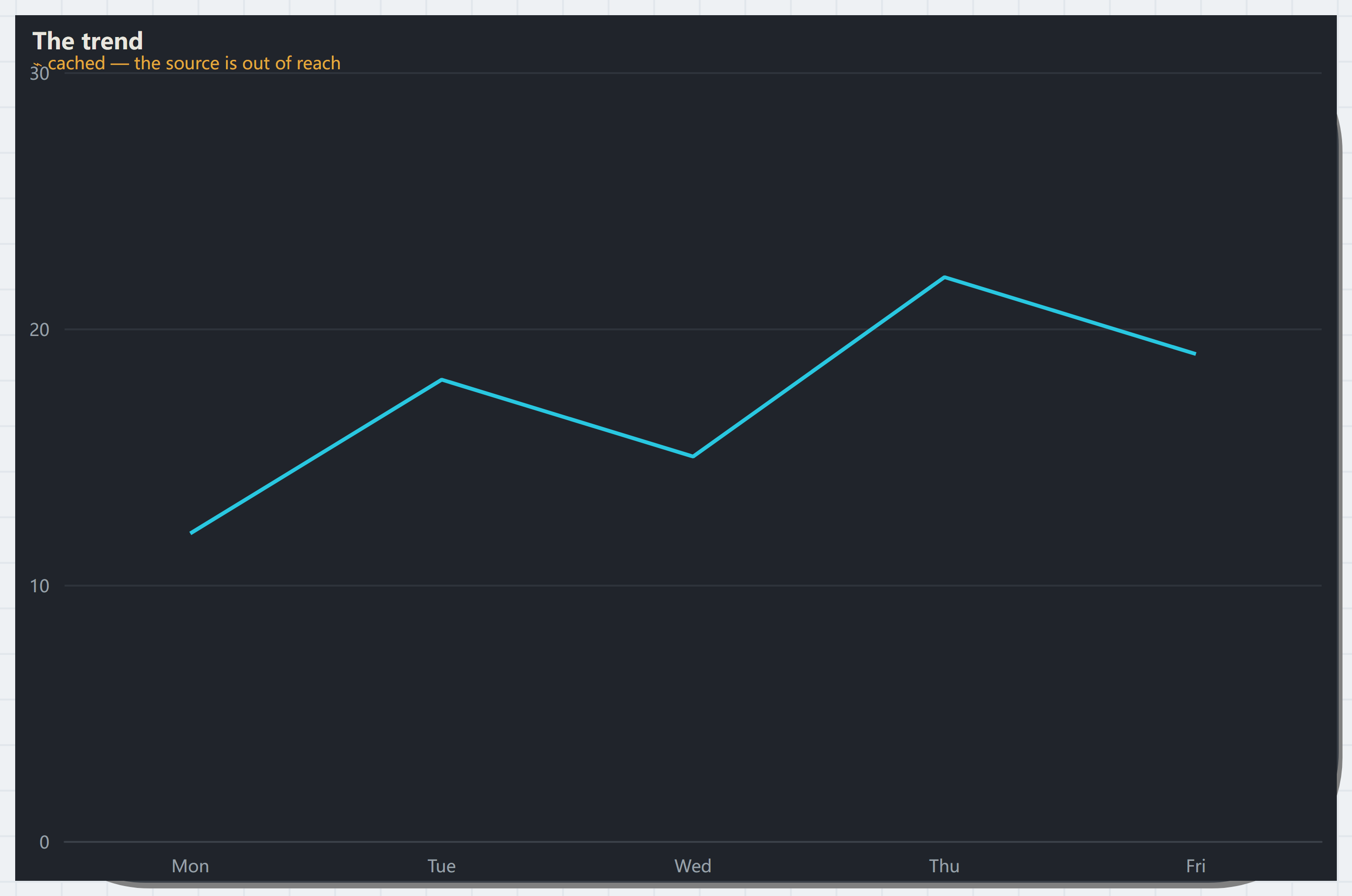
the mood in the pilot cluster is measurable — a real record from a real board (ps-04 · src-sentiment), the same card in both of its honest states
People who work on a surface
Specialists in the phase before their main tool — research, sketches, one-lines, evidence assembled to survive a hostile reader. The clusters below are them, named honestly: verified workflows as fact, the rest as reasoned analysis.
Grid Space takes three positions in a working life
Before your main tool
The research, the sketch, the one-line diagram, the does-A-work-with-B validation — done on the board, handed off as data. Your specialist tool starts from structure instead of from screenshots. This is the design engineer's and the architect's position.
the phase before
The work itself
For source-and-analysis work — the analyst, the researcher, the investigator — the assembly of evidence is the job. The board is where it happens: sources bound, claims carrying receipts, a record built to survive a hostile reader.
the phase itself
After the work
The record of what was decided and why — the documentation, the evidence trail, and where this leads: the published specification built from the work itself rather than rewritten beside it. Publishing is Grid Space's direction, marked as such — not a shipped feature.
the phase after
The IDE-native cluster
PILOT AUDIENCE · the gate decidesSix roles, deliberately one cluster. What groups them is not job similarity — it is AI-technical capability and desire, plus IDE adoption. They are closer to AI than anyone else, and most already sit in an integrated development environment. Their shared job, whatever the title: developing and analysing data — the sources, and what has to be analysed. Source work, not build work.
The person deciding how the AI system should work — before any of it is built.
- WHAT THEY DO · THEIR TOOLS
- Architecture, evaluation design, tradeoff analysis. An IDE with AI agents in it, and — for the thinking phase — whatever holds still long enough: markdown files, a notes app, a whiteboard photo.
- THE GAP
- The evaluation itself. Which model, which agent framework, what the costs and context windows actually are, what the failure modes look like — a real technical evaluation with sources, assembled today across browser tabs and prose documents that carry none of its structure.
- ON GRID SPACE
- The candidates land as sourced records. The comparison is a bound matrix; the cost picture is a chart bound to the same data; the architecture is a one-line diagram that is a record, not a picture. Every claim answers "why do you say that" with a source.
- WHAT CARRIES FORWARD
- The evaluation as structured data — on the board, and exportable into the repo the team already works in — the decision, its evidence and its dissent, readable by the next person and by the team's own AI. The design survives into the build.
THE CANDIDATE MATRIX — NAMED, NEVER SHOWN, UNTIL NOW
| candidate | context | cost | source |
|---|---|---|---|
| model A | bound | bound | ✓ |
| model B | bound | bound | ✓ |
| framework | bound | bound | ✓ |
every cell a bound record — "why do you say that" has an answer
DEEP BLOCKthe AI architect
Your IDE's AI already plans in the repo. Its plan is a markdown file.
- WHAT THEY DO · THEIR TOOLS
- Build software. IDE + AI agents — and those agents already do upfront planning in the repo: rules files, planning documents beside the code. We say that plainly because you already know it.
- THE GAP — what a plan.md cannot do
- Linear prose in a repo scrolls, evaporates from attention, and carries no bound data. A plan.md cannot show the cost comparison as a chart, cannot hold a one-line diagram, cannot carry provenance on a face — and next month nobody remembers which paragraph decided what.
- ON GRID SPACE
- The same planning phase, but persistent, spatial and addressed: the spike results as bound figures, the approaches compared side by side at addresses you can point to in a review, the decision log carrying its receipts — written by your AI through a gate that refuses an unsourced number — and exportable into the repo beside the code.
- WHAT CARRIES FORWARD
- The plan is data, not prose — and on the self-hosted or exported path it sits in the repo beside the code, so the planning record is still legible when the feature ships.
THE DECISION LOG, WITH RECEIPTS
| entry | receipt |
|---|---|
| the approach, decided | spike results · bound |
| the dissent, recorded | bench figures · bound |
| the cost call | chart · same data |
persistent, spatial, addressed — legible when the feature ships
DEEP BLOCKthe engineer / dev team
Product thinking, market research, the roadmap — before there is anyone to delegate to.
- ANALYSIS
- Almost certainly in an IDE already — which is why they belong here despite doing different daily work. The upfront phase is constant: tooling research, market structure, the build-vs-buy calls. If that work lives in scattered docs today, the board gives it addresses, sources and persistence — and an export drops the thinking beside the code it justifies.
- WHAT CARRIES FORWARD
- The research record behind every early decision, still checkable when the company is big enough for someone to ask why.
BUILD VS BUY, AS RECORDS
| option | evidence |
|---|---|
| build | sourced cards |
| buy | sourced cards |
| wait | stated honestly |
the research record behind every early decision, still checkable
ANALYSISthe technical founder
The phase before the notebook: finding sources, shaping the question.
- ANALYSIS
- Notebooks, SQL and BI serve the analysis itself. The phase before — which sources exist, what they cover, what is worth analysing — mostly lives in tabs and memory. On the board it becomes records with receipts: coverage stated, licences named, freshness visible. For this role Grid Space can be the main tool: source work is the job.
- WHAT CARRIES FORWARD
- A source map the next analysis starts from instead of rebuilding.
THE SOURCE MAP
| source | coverage | freshness |
|---|---|---|
| registered once | stated | visible |
| bound many times | stated | visible |
the next analysis starts here instead of rebuilding
ANALYSISthe analyst / data-minded engineer
Strong tools exist here already. We say so.
- ANALYSIS — stated against ourselves
- The reference-manager stack is entrenched, free, and citation-native — if that stack serves you, it serves you well. The honest difference is shape: an evidence wall where every claim points at what it rests on, on one addressed surface, with the record — not a picture of it — carrying into the thesis. If you are already making the IDE transition, the door is open — a record built to survive a hostile reader is the PhD's whole working life, and that is the shape this board holds.
THE EVIDENCE WALL, ONE THREAD
a record built to survive a hostile reader — the PhD’s whole working life
CUSPthe PhD student
The planning before the plan exists.
- ANALYSIS — stated against ourselves
- The ticket tracker holds the plan once it exists; the phase before is slides and spreadsheets. On the hosted product the pre-plan phase gains addresses and receipts without asking you to become an IDE person — and if you already are one, the AI+ path is there too. The honest caveat is fit: this works when you treat the plan as records, not slides.
THE PRE-PLAN, WITH ADDRESSES
| item | address | receipt |
|---|---|---|
| assumption | B2 | bound |
| constraint | C4 | bound |
| the call | D6 | recorded |
the phase before the ticket tracker — with addresses and receipts
CUSPthe project manager
The technical specialist
OPEN FROM DAY ONE — the hosted AI tier carries you without an IDEHigh tool fluency, domain-specific rather than general-purpose — people who have already climbed one steep tool. The hosted AI tier carries this cluster from day one — no IDE required. Two seams inside it, and they get different sentences because continuity means different things to them: evidence people need the record to survive a hostile reader — provenance is the value. Systems-and-space people need to not do the work twice — effort continuity is the value.
The drafting tool holds the drawing. Slides hold the telling. The spreadsheet holds the arithmetic. Nothing holds the phase before any of them — and that is where the design is decided.
- WHAT THEY DO · THEIR TOOLS
- High-level system design for proposals — audiovisual, video walls, security, transport. CAD for production; slides and spreadsheets for everything before it.
- THE GAP — verified
- The research and validation before systems engineering: which products work together, what the configuration is, what the thresholds are, how it connects. Documented today as spreadsheets, screenshots of manufacturer specs, and slides.
- ON GRID SPACE — as the front-end tool
- Product research landing as sourced cards. The candidate matrix — manufacturer, model, capability, source link — bound, not pasted. One-line diagrams that are records. The configuration checked against thresholds, with the check on the board.
- WHAT CARRIES FORWARD — the never-twice pitch
- The validated product set with citations, and the connection logic, as data — into CAD and into the spec. Two weeks of research arrives in the next tool as structure, not as a memory and a folder of screenshots.
THE CANDIDATE MATRIX — BOUND, NOT PASTED
| manufacturer | model | capability | source |
|---|---|---|---|
| stated | stated | checked | ✓ |
| stated | stated | checked | ✓ |
two weeks of research arrives in CAD as structure, not screenshots
VERIFIEDthe founder's own field — the design engineer
A general-purpose diagram tool is doing crime-scene work. That says the gap is real.
- WHAT THEY DO · THEIR TOOLS
- Scene documentation and case assembly: 3D laser scanners, photogrammetry, trajectory analysis — and, for the scene diagrams and the case file itself, general-purpose tools like SmartDraw and hand sketches re-entered later.
- THE GAP
- The assembly phase before the specialist suites: what was found, where, supported by which measurement, feeding which conclusion. Evidentiary work carried by tools with no concept of evidence.
- ON GRID SPACE — the provenance pitch, sold directly
- Every card carries its source and keeps it through every copy and export. The claim points at the evidence; the evidence states its origin; the record is built for the reader whose job is to attack it. Staleness is a fact on the face, not a discovery in cross-examination.
- WHAT CARRIES FORWARD
- A case record whose chain of custody of reasoning — claim to evidence to source — is inspectable end to end.
THE CHAIN OF CUSTODY OF REASONING
inspectable end to end — built for the reader whose job is to attack it
VERIFIED SIGNALthe forensic examiner
One of the most sophisticated toolsets in any industry — and early concepts get sketched in slides.
- ANALYSIS
- Programme, feasibility, precedent research, code and zoning, massing — all before the BIM tool will help. That a BIM architect reaches for slides at concept stage is the clearest illustration of the whole thesis anyone has offered. One honest note: AI spatial tools are moving inside BIM ecosystems for early massing — we watch that line and write only what stays true. What those tools do not hold is the research record: the precedents, the code checks, the programme logic with sources. On the board that phase becomes precedents and code research as sourced cards, with massing sketches and one-line programme diagrams on the same addressed surface.
- WHAT CARRIES FORWARD
- The programme and the research record into BIM — decided, cited, structured before production work commits.
THE PRECEDENT RESEARCH, SOURCED
| card | carries |
|---|---|
| precedent | citation |
| code check | the clause |
| programme | its logic |
decided, cited, structured — before the BIM tool commits
VERIFIED EXAMPLEthe architect (building)
One-lines, load thinking, feasibility — before the production tool.
- ANALYSIS
- AutoCAD Electrical, Civil 3D and their kin assume the design is decided. If the early one-lines, the site studies, the product selection and the feasibility notes live in slides and spreadsheets today, the shape of the gap is the design engineer's — and the same front-end position applies: research, sketch, validate, hand off as data. We state this as analysis; the specific workflows await verification with practitioners.
THE ONE-LINE THAT IS A RECORD
readable, not guessable — and it hands off as data
ANALYSISthe electrical engineer · the civil engineer
Named honestly: the gap is likely, the specifics unverified.
- ANALYSIS
- The founder has domain exposure and the structural pattern — a specialist tool downstream, an unserved thinking phase upstream — almost certainly holds. We have not verified the day-to-day specifics, so this block stays short until we have. For the physicist working mostly in notebooks, the analyst's block above is probably the truer mirror.
THIS PANEL, HONESTLY
No specimen yet — the day-to-day is unverified, and an invented one would be the overstatement this page refuses. The block earns its specimen when practitioners verify the specifics.
ANALYSISthe biomedical engineer · the physicist
Source work under the hardest reader there is.
- ANALYSIS — the evidence pitch
- Managing research, sources and the case being assembled — the same evidence seam as the examiner, pointed at publication or prosecution. The machinery that serves it exists today: evidence cards, claims with receipts, the kept shelf, the gate that refuses an unsourced number. What we have not verified is the newsroom's or the agency's actual toolchain — and for institutional users, procurement and data-handling rules may decide before capability does. We say that rather than paper over it.
CLAIMS, WEARING RECEIPTS
| claim | receipt |
|---|---|
| what happened | evidence card ✓ |
| who says so | source, named |
| when it was read | on the face |
the kept shelf holds the sources; the gate refuses an unsourced number
ANALYSISthe investigative reporter · the investigator
The capability fits. Procurement may not care.
- ANALYSIS — stated against ourselves
- Workpapers and evidence trails are provenance work. Their objection is real, and the answer is the self-hosted tier — the whole platform inside their own environment. But audit runs on approved-tool lists, and approval lists run on process, not architecture. If your firm's list is the law, we are not on it yet — this block exists so you know we know.
THE WORKPAPER TRAIL
| workpaper | evidence | provenance |
|---|---|---|
| finding | bound | on the face |
| exception | bound | on the face |
provenance work by shape — stated against ourselves on procurement
ANALYSISthe auditor / CPA
Who is not courted: any role that cannot clear the entry bar — GitHub, a repo, real comfort with technical tools. Not because the work wouldn't fit, but because promoting a capability to someone who cannot reach it is the overstatement this site refuses everywhere else.
The beat that decides it: what carries forward
A whiteboard gives you a photo of a decision. Grid Space gives you the decision plus the structured record behind it — the products compared, the sources cited, the thresholds checked — hosted by GRIDINT, yours to export in full, in a form your technical tool can consume. Export is load-bearing, not a convenience: we hand off, we do not lock in. You do the planning once, and the planning survives into the build.